
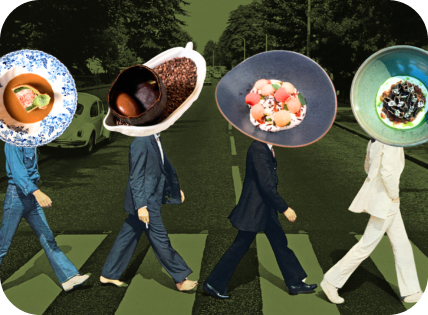
For a country with one of the most layered food cultures in the world, the absence of the Michelin Guide in India feels almost strange. It’s not a question of whether the food exists. It clearly does. What’s missing is the system that formally recognises it.
But something interesting has been happening over the last few years. A certain kind of restaurant has started to emerge across the country. Small formats. Tasting menus. Deep research into ingredients. Kitchens that are not trying to “modernise Indian food” in a superficial way, but are instead rebuilding it from the ground up.
We started looking into this more seriously, and the same names kept appearing across awards, critic lists, and conversations within the industry. Not just popular places, but restaurants that are operating at a level of intent, discipline, and clarity that aligns closely with how Michelin evaluates food.
This is not a definitive list. It’s a considered one. These are the restaurants that feel most ready, if Michelin were to arrive tomorrow.
Masque
Masque has spent nearly a decade building something very specific. Not a modern Indian restaurant in the expected sense, but an ingredient-led kitchen that begins with sourcing and builds everything else around it.
The team works closely with farmers, foragers, and producers across the country. Ingredients are not chosen for familiarity. They are chosen for potential. What ends up on the plate often introduces you to parts of India’s food landscape that rarely enter restaurant kitchens.
Dishes like black rice dumplings topped with red fire ants are not created for shock value. They come from a place of research and intent. The flavours are precise, the plating is controlled, and the experience moves with a quiet confidence that comes from years of refinement.
Under chef Varun Totlani, who has grown within the restaurant itself, Masque has maintained a strong internal culture. That continuity shows. It reflects in the consistency of the food, the service, and the overall experience.
It is already one of the most internationally recognised restaurants from India, with repeated appearances on Asia’s 50 Best list. If Michelin looks for kitchens with a clear point of view and the discipline to execute it every single night, Masque fits that expectation closely.
Papa’s
Papa’s is a very different kind of experience. It is small, tightly controlled, and built almost entirely around the chef’s voice.
There are only twelve seats. One counter. One service at a time.
Chef Hussain Shahzad brings in a background shaped by some of the most demanding kitchens globally, and you can see that training in the structure of the meal. The menu moves quickly, but never feels rushed. Each course carries a clear idea.
A rasam can arrive reworked with trout and watermelon. A dish named “Bugs Bunny” serves rabbit with edible ants, but it is balanced and deliberate rather than gimmicky. Even something as familiar as biryani is reinterpreted through texture, ending the meal on a note that feels both nostalgic and completely new.
What stands out is control. Nothing feels accidental. Every course is part of a larger narrative, but the meal never becomes heavy or self-serious.
Restaurants like this often depend heavily on the chef’s presence, which can be a risk over time. But when they work, they create some of the most memorable dining experiences. Papa’s already has international attention within a year of opening. That kind of early recognition usually points to something substantial.
NĀAR
NĀAR is not just about food. It is about place.
Located in the hills near Kasauli, the experience begins even before the first course. Guests walk in through a dimly lit path, often greeted by the resident dog, before settling into a space that feels closer to a mountain home than a restaurant.
Chef Prateek Sadhu has built the menu around the Himalayas. Not as a theme, but as a living ecosystem. Ingredients are sourced locally wherever possible, and the cooking leans into fire, smoke, and preservation techniques that are rooted in the region.
You see this in dishes built around smoked trout, buckwheat, fermented elements, and even desserts that use pine or seabuckthorn. The food carries a strong sense of identity without feeling restrictive.
What makes NĀAR stand out is its clarity. It knows exactly what it wants to be, and everything from the setting to the service supports that idea.
Accessibility could be a challenge. It requires effort to get there, and that naturally limits volume. But restaurants like this are rarely about scale. They are about depth. Michelin has historically recognised destinations that are worth travelling for, and NĀAR fits that category.
FarmLore
FarmLore operates from a 37-acre farm on the outskirts of Bengaluru, and that context defines everything about it.
The restaurant grows a significant portion of its ingredients on-site. Menus are built around what is available at that moment, which means they change frequently but remain grounded in the same philosophy.
Chef Johnson Ebenezer approaches food with a mix of technical precision and conceptual thinking. Some dishes are straightforward expressions of produce. Others carry a more layered narrative.
One course that often comes up in conversations is built around ocean pollution. Fish is plated with elements that resemble plastic, but are entirely edible. It is not presented as a lecture. It is subtle, but it stays with you.
FarmLore’s strength lies in how naturally it integrates storytelling into the meal without losing focus on flavour. The experience feels thoughtful rather than performative.
Like many destination restaurants, it faces the challenge of visibility. It is not easy to get to, and seating is limited. But that also allows for a level of control that larger restaurants struggle to maintain.
Indian Accent
FarmLore operates from a 37-acre farm on the outskirts of Bengaluru, and that context defines everything about it.
The restaurant grows a significant portion of its ingredients on-site. Menus are built around what is available at that moment, which means they change frequently but remain grounded in the same philosophy.
Chef Johnson Ebenezer approaches food with a mix of technical precision and conceptual thinking. Some dishes are straightforward expressions of produce. Others carry a more layered narrative.
One course that often comes up in conversations is built around ocean pollution. Fish is plated with elements that resemble plastic, but are entirely edible. It is not presented as a lecture. It is subtle, but it stays with you.
FarmLore’s strength lies in how naturally it integrates storytelling into the meal without losing focus on flavour. The experience feels thoughtful rather than performative.
Like many destination restaurants, it faces the challenge of visibility. It is not easy to get to, and seating is limited. But that also allows for a level of control that larger restaurants struggle to maintain.
So Where Does That Leave Us
India may not have a Michelin Guide yet, but the framework it uses already exists within these kitchens.
You see it in the way ingredients are sourced, in the level of technical control, in how clearly each restaurant expresses its point of view. Most importantly, you see it in consistency. Not just one good meal, but the ability to deliver that standard repeatedly.
If and when Michelin arrives, it will not be introducing something entirely new to the country. It will be acknowledging what is already happening.
And if that day comes soon, these are the restaurants that feel ready for it.
